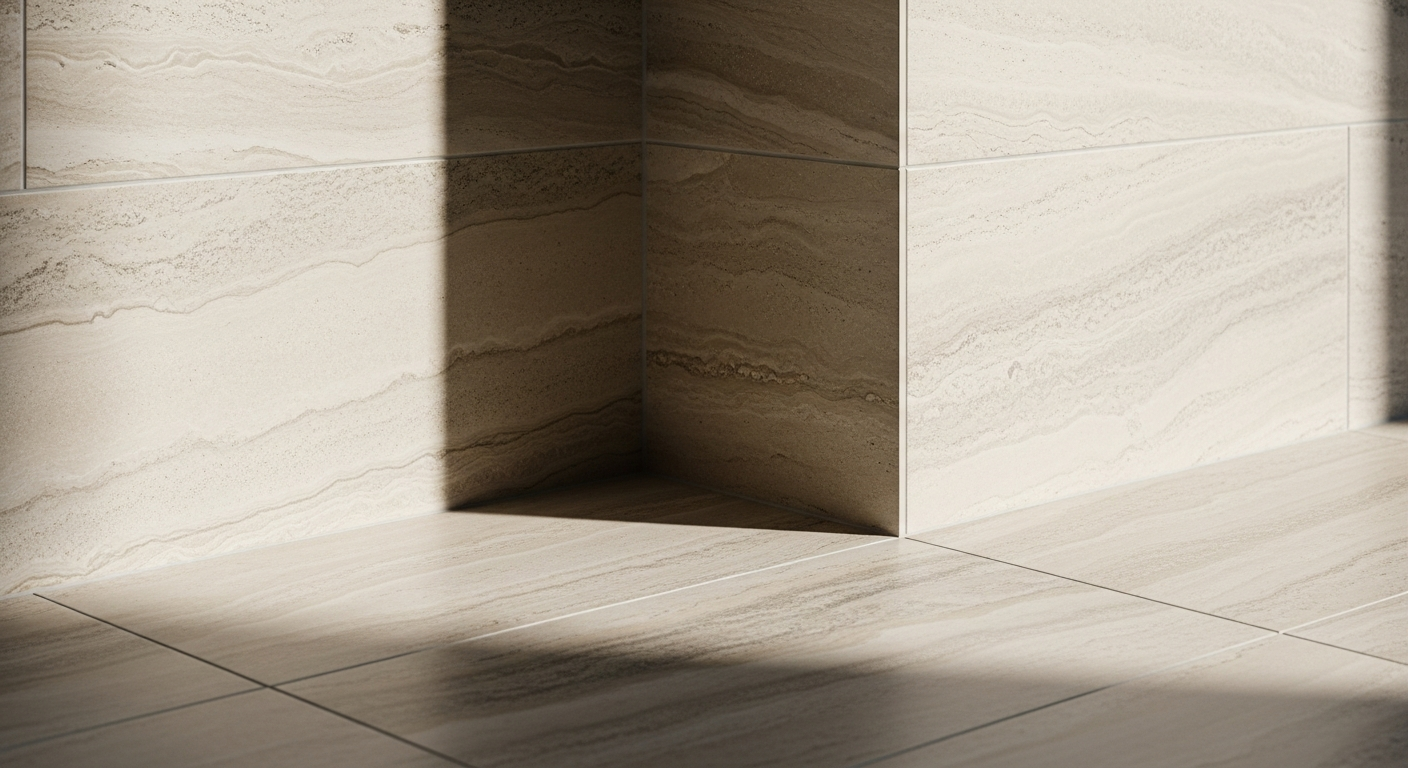
Tile is the dominant material in any bathroom renovation, covering more surface area than any other single element. It also represents one of the most permanent choices in the renovation — removing and replacing tile is one of the most disruptive and expensive bathroom repairs. Understanding how different tile types perform before selecting them is essential.
This guide covers the major tile categories available for bathroom applications, evaluates each on performance and maintenance, and addresses where each tile type belongs and which applications it is not appropriate for.
Porcelain Tile: The Benchmark Material
Porcelain tile is fired at higher temperatures and with finer clay material than standard ceramic tile, producing a denser, harder, and lower-porosity result. It is the benchmark material for bathroom applications because it performs well across all surfaces — shower walls, bathroom floors, shower floors, and wet areas — and requires minimal maintenance.
Porcelain tile absorbs less than 0.5 percent of water by weight (the industry definition of 'impervious'), making it genuinely resistant to moisture penetration. It is harder than ceramic and resists scratching, staining, and abrasion well. It can be manufactured to any dimension from small mosaic to large slab, and can replicate the appearance of natural stone, wood, concrete, and fabric with current digital printing technology.
For large-format bathroom applications, rectified porcelain (cut to precise dimensions during manufacturing) allows grout joints as narrow as 1/16 inch, creating the near-seamless appearance common in contemporary luxury bathroom design.
Ceramic Tile: Budget Applications with Real Limitations
Ceramic tile is manufactured at lower firing temperatures than porcelain, resulting in a more porous material with a softer bisque (the clay body beneath the glaze). Standard ceramic tile has a water absorption rate of 3 to 7 percent — significantly higher than porcelain. For bathroom applications where moisture is constant, particularly in showers and wet areas, ceramic tile's porosity creates a meaningful limitation: it absorbs more water, which can lead to grout deterioration, efflorescence (white mineral deposits), and in worst cases, moisture infiltration behind the tile.
Ceramic tile is appropriate for bathroom floor applications in lower-traffic areas and for bathroom walls in half-baths and powder rooms. For shower applications, porcelain or natural stone is strongly preferred. The cost difference between mid-range ceramic and porcelain is typically not large enough to justify the performance trade-off in a full bathroom renovation.
Natural Stone Tile: Marble, Travertine, and Slate
Natural stone tile — marble, travertine, limestone, slate, quartzite — brings authentic material character to a bathroom that porcelain replicas approach but do not fully replicate. Each piece is unique. The variation in veining, color, and texture across a natural stone installation creates a visual richness that manufactured tile cannot duplicate.
Natural stone requires sealing — typically one to two times per year in bathroom applications — because its natural porosity absorbs water and staining substances. Without regular sealing, marble and travertine develop staining, etching from soap and mild acids, and in shower applications, potential moisture infiltration. Slate, which is denser than marble and travertine, requires less frequent sealing but benefits from it.
For shower floor applications, honed (matte) natural stone provides better slip resistance than polished stone. Travertine with its natural surface texture is a slip-resistant choice for shower floors; polished marble is not appropriate for shower floors due to its slippery surface when wet.
Mosaic Tile: Function and Detail
Mosaic tile — tiles measuring 2x2 inches or smaller, typically mounted on mesh backing sheets for installation — serves both functional and decorative purposes in bathroom design. On shower floors, mosaic tile is the appropriate choice: the small tile size allows the installer to maintain the drainage pitch toward the drain without creating lippage between tiles. The greater number of grout joints in mosaic tile also provides texture that improves slip resistance in a wet environment.
Mosaic tile is also used as a design accent — in shower niches, as a decorative border between large-format wall tiles, as a feature wall in a shower, or as a bathroom floor pattern. Glass mosaic tile, stone mosaic, and handmade ceramic mosaic each bring distinct visual character and are appropriate for specific design contexts.
The maintenance consideration for mosaic tile is the grout surface area. Mosaic tile has significantly more grout joints per square foot than large-format tile, which means more grout to clean and maintain. This consideration does not disqualify mosaic from shower floor use — it is the right material for shower floors — but it does argue against specifying mosaic tile across large wall surfaces where fewer grout joints would serve maintenance better.
Grout: The Most Overlooked Tile Specification
Grout receives less attention in the tile selection process than it deserves. The grout color affects the overall appearance of the tile installation as much as the tile itself: a dark grout with a light tile creates a grid pattern that emphasizes each tile's individual geometry; a matching grout color minimizes the visibility of joints and creates a more seamless appearance.
Grout type matters as much as color. Sanded grout is appropriate for joints wider than 1/8 inch; unsanded (non-sanded) grout for narrow joints. Epoxy grout is the most stain-resistant and maintenance-friendly option: it does not require sealing, resists staining and mildew, and maintains its original color significantly better than standard cement-based grout. The cost premium for epoxy grout is meaningful but justified in high-traffic bathroom applications and shower installations.
Surface-Specific Tile Selection Guide
Shower walls: Porcelain (best), natural stone (excellent with sealing), large-format tile (ideal for minimal grout lines). Minimum size: 12x12 inches for a clean appearance; 24x24 inches and larger for contemporary design.
Shower floors: Mosaic tile (required for drainage pitch and slip resistance). Natural stone mosaic or porcelain mosaic in a honed or textured finish. Maximum tile size: 4x4 inches for adequate drainage pitch control.
Bathroom floors (outside shower): Large-format porcelain (24x24 and larger) for contemporary bathrooms; 12x24 or 12x12 for transitional applications. Specify a coefficient of friction (COF) rating appropriate for wet areas.
Bathroom walls (outside shower): Any tile type is appropriate. Subway tile (3x6, 4x8, and larger formats) remains extremely popular for its adaptability across traditional, transitional, and contemporary styles.
Ready to Start Planning?
Talk to the Three Brothers Team
We've completed hundreds of kitchen and bathroom renovations across Westchester County since 1979. Visit our Chappaqua showroom or call to discuss your project.
Frequently Asked Questions
What is the best tile for a shower?
Porcelain tile is the best all-around choice for shower walls — it is non-porous, durable, and low-maintenance. Natural stone tile (marble, travertine) is appropriate with proper sealing. For shower floors specifically, mosaic tile (2x2 inches or smaller) is required for drainage pitch control and slip resistance.
What is the difference between porcelain and ceramic tile?
Porcelain is fired at higher temperatures from finer clay, producing a denser, harder, and less porous material than standard ceramic. Porcelain absorbs less than 0.5% of water; ceramic absorbs 3 to 7%. For bathroom applications — particularly showers and wet areas — porcelain's superior moisture resistance makes it the better choice.
Do bathroom tiles need to be sealed?
Porcelain and ceramic tile do not require sealing. Natural stone tile (marble, travertine, limestone, slate) does require periodic sealing — typically once or twice per year in bathroom applications. Grout in any tile installation benefits from sealing, regardless of tile type.
What grout should I use in a shower?
Epoxy grout is the best choice for shower applications: it is stain-resistant, does not require sealing, resists mildew, and maintains its color over time better than cement-based grout. For joints wider than 1/8 inch, use sanded grout (epoxy or cement-based); for narrower joints, use unsanded grout.
How large should bathroom tile be?
For contemporary bathrooms, large-format tile (24x24 inches and larger) creates fewer grout joints and a more expansive visual effect. For shower floors, small mosaic tile (2x2 inches or smaller) is required for proper drainage pitch. Traditional bathrooms may specify 12x12 or 12x24 floor tile and 3x6 or 4x8 subway wall tile.
Is natural stone tile slippery in a shower?
Polished natural stone is slippery when wet and is not appropriate for shower floors. Honed (matte) natural stone and natural-cleft slate provide better grip in wet conditions. Specify a coefficient of friction (COF) rating of 0.50 or higher (wet) for any tile used on a shower or bathroom floor.
How do I choose a grout color?
Matching grout color to tile color minimizes the visibility of joints and creates a more seamless appearance — preferred in contemporary and luxury installations. Contrasting grout emphasizes each tile's individual geometry and is more associated with traditional design (white tile with gray grout, for example). Dark grout on light tile also shows dirt and soap residue more readily than matching grout.