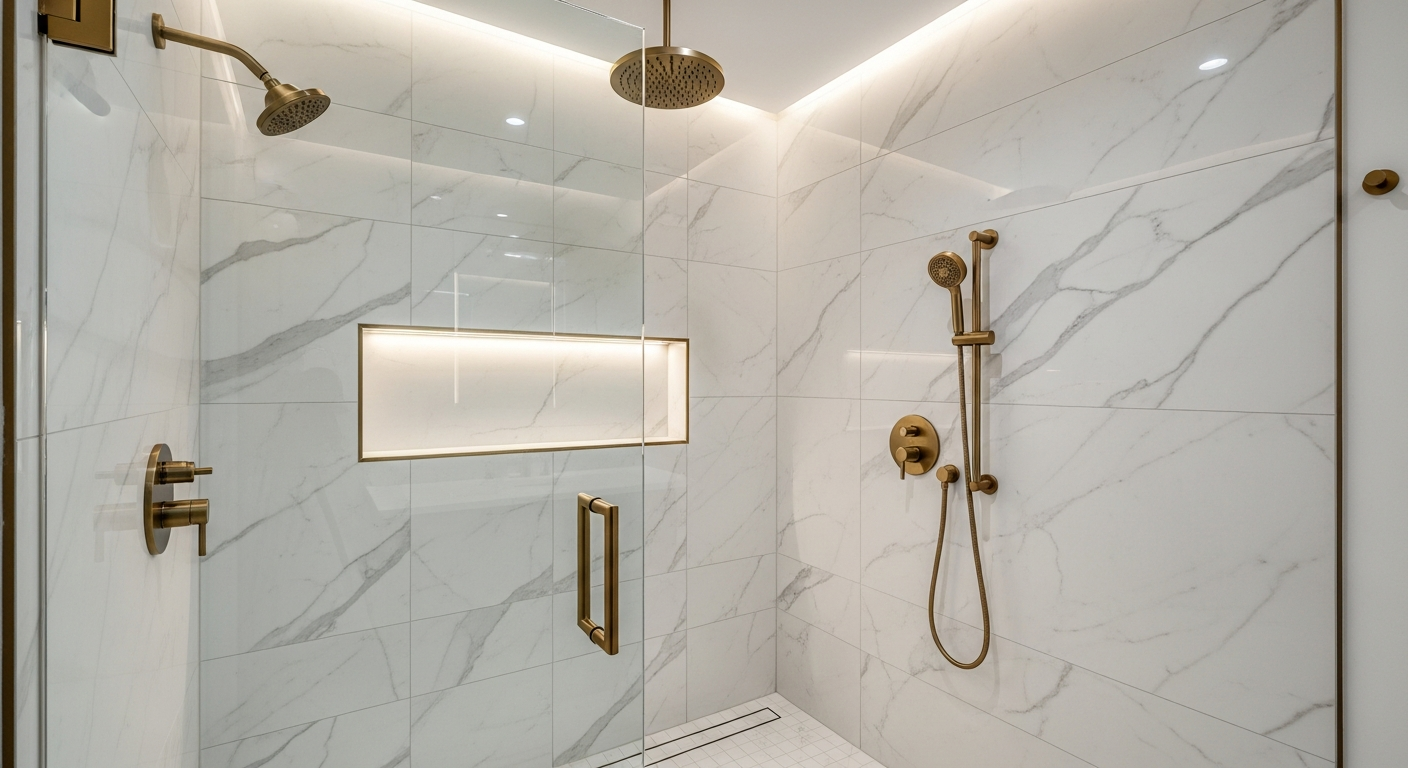
In primary bathroom renovation, no single decision generates more uncertainty than shower versus tub. The choice feels permanent — and in most renovations, it is. Getting it right requires thinking honestly about how your household actually uses the bathroom today and how those patterns are likely to change.
This guide provides a framework for the decision, grounded in practical considerations: space, daily use habits, resale implications, and the growing importance of aging-in-place design. There is no universal right answer, but there is a right answer for your specific household.
The Honest Question: When Did You Last Use the Tub?
Before evaluating design options and resale considerations, ask the straightforward question: how often is the existing tub used by the people who live in the house right now? If the answer is 'regularly — for soaking, for children's baths, or for specific wellness routines,' the case for keeping a tub is strong. If the answer is 'rarely or never,' you are maintaining a fixture that occupies significant floor space in exchange for an occasionally-used amenity.
Many homeowners feel psychological pressure to keep a bathtub in the primary bathroom based on resale considerations, a vague sense that tubs 'should' be there, or the memory of using one in a previous home. These are legitimate considerations, but they should not automatically override the actual usage patterns of the household.
Space and the Shower-Tub Trade-Off
In a primary bathroom of 80 square feet or less, a dedicated soaking tub and a large walk-in shower cannot coexist without one compromising the other. A soaking tub requires a minimum footprint of approximately 32 by 60 inches; a meaningful walk-in shower (one that feels luxurious rather than cramped) requires at minimum 36 by 48 inches and is far more functional at 42 by 60 inches or larger.
When both fixtures are forced into a small space, the result is typically a tub that feels too small to soak in comfortably and a shower that feels cramped. Converting the tub space to a larger shower often produces a dramatic improvement in both the daily utility of the bathroom and the visual openness of the space.
In larger primary bathrooms — 100 square feet and above — both a soaking tub and a substantial walk-in shower can coexist comfortably. The combination (often featuring a freestanding soaking tub as a design centerpiece) is the aspirational standard in luxury primary bathroom renovation.
The Resale Consideration
The most frequently cited reason for maintaining a bathtub in the primary bathroom is resale value. The conventional wisdom — that buyers require a tub in the home — holds up, with an important nuance: buyers expect at least one bathtub somewhere in the home, not necessarily in the primary bathroom.
In Westchester real estate, the common practical guidance is: maintain a tub in a secondary bathroom (hall bathroom or children's bathroom) if you are converting the primary bathroom to a shower-only configuration. A home with no tub anywhere is a meaningful resale issue. A home with a stunning walk-in shower in the primary bathroom and a functional tub in the hall bathroom typically satisfies buyer expectations across demographic profiles.
For luxury homes in the $1.5M+ range in Westchester, a primary suite with both a large walk-in shower and a freestanding soaking tub is the expectation at that price point. Omitting the tub in that context is a departure from market expectations.
Design and Practical Advantages of a Walk-In Shower
A properly designed walk-in shower — frameless glass enclosure, quality rain head or ceiling-mounted shower system, heated floor tile, and niche storage — is one of the most consistently satisfying investments in a primary bathroom renovation. The daily experience of using a well-designed shower (compared to stepping over a tub wall into a confined 36-inch by 36-inch shower stall) has a direct quality-of-life impact.
From a cleaning standpoint, large-format tile in a walk-in shower (fewer grout joints) and frameless glass (no metal frame to accumulate soap scum) are significantly easier to maintain than a shower-tub combo with a curtain rod and standard-height surroundings.
Aging in Place: The Case for the Walk-In Shower
From a long-term accessibility standpoint, the walk-in shower has a clear advantage. Stepping over a bathtub threshold is among the most common causes of bathroom falls in older adults. A curbless or low-curb walk-in shower with a bench and strategically placed grab bars accommodates a wide range of mobility needs and does so without the institutional appearance of traditional accessible bathroom design.
Homeowners over 50 who are planning to remain in their homes for an extended period should weight this consideration heavily. A thoughtfully designed walk-in shower that works well for daily use today can serve the household's needs through significant changes in mobility without requiring renovation. A standard tub-shower combo cannot.
Ready to Start Planning?
Talk to the Three Brothers Team
We've completed hundreds of kitchen and bathroom renovations across Westchester County since 1979. Visit our Chappaqua showroom or call to discuss your project.
Frequently Asked Questions
Should I remove my bathtub in the primary bathroom?
It depends on household use. If no one in the household regularly uses the tub, and the bathroom would benefit from a larger shower, converting makes practical sense. Ensure at least one tub remains somewhere in the home for resale purposes. If a household member uses the tub regularly for soaking or therapeutic purposes, retain it.
Does removing a bathtub hurt resale value?
Removing the only tub in a home creates a meaningful resale issue for buyers with young children and certain buyer profiles. Maintaining a tub in a secondary bathroom while converting the primary to a walk-in shower is generally acceptable to Westchester buyers. In luxury homes ($1.5M+), a soaking tub in the primary suite remains a market expectation.
What is the minimum size for a comfortable walk-in shower?
The minimum functional size for a walk-in shower is 36 by 48 inches. A walk-in shower that feels genuinely comfortable and allows movement around a rain head is 42 by 60 inches. Primary suite showers in luxury renovations are frequently 48 by 72 inches or larger, particularly when a shower bench is included.
Is a freestanding tub practical for regular soaking?
Yes, if sized appropriately. Many freestanding tubs — particularly those with sloped backs and deeper soaking dimensions — are more comfortable than the alcove tubs they replace. The limitation of freestanding tubs is that filling them takes longer than an alcove tub (they hold more water) and the faucet plumbing requires floor-mounted supply connections, which adds installation complexity.
What features make a walk-in shower feel luxurious?
A ceiling-mounted or wall-mounted rain shower head, a frameless glass enclosure, large-format floor tile in a non-slip surface, built-in tile niches (at least two), a teak or marble bench, and heated floor tile. Thermostatic shower valves — which maintain precise water temperature without requiring adjustment — significantly improve the daily shower experience.
Can I convert my tub-shower combo to a walk-in shower myself?
No — this is renovation work that requires licensed plumbing and waterproofing expertise. Plumbing supply lines must be relocated or capped, the drain position may need adjustment, and the entire shower must be properly waterproofed before tile is installed. DIY shower waterproofing is one of the most common sources of bathroom moisture damage and mold. Use a licensed contractor.
What is a curbless shower and who should consider one?
A curbless shower has no raised threshold at the entry — the floor transitions from the bathroom floor to the shower floor at the same level (with a slight pitch toward the drain). This design is accessible for people with mobility limitations, visually open, and easy to step in and out of. It is also more complex to waterproof and requires a linear drain or center drain with a larger radius pitch. Curbless showers are strongly recommended for homeowners considering aging-in-place design.